
$850.00
Acrylic on wood with gloss varnish.
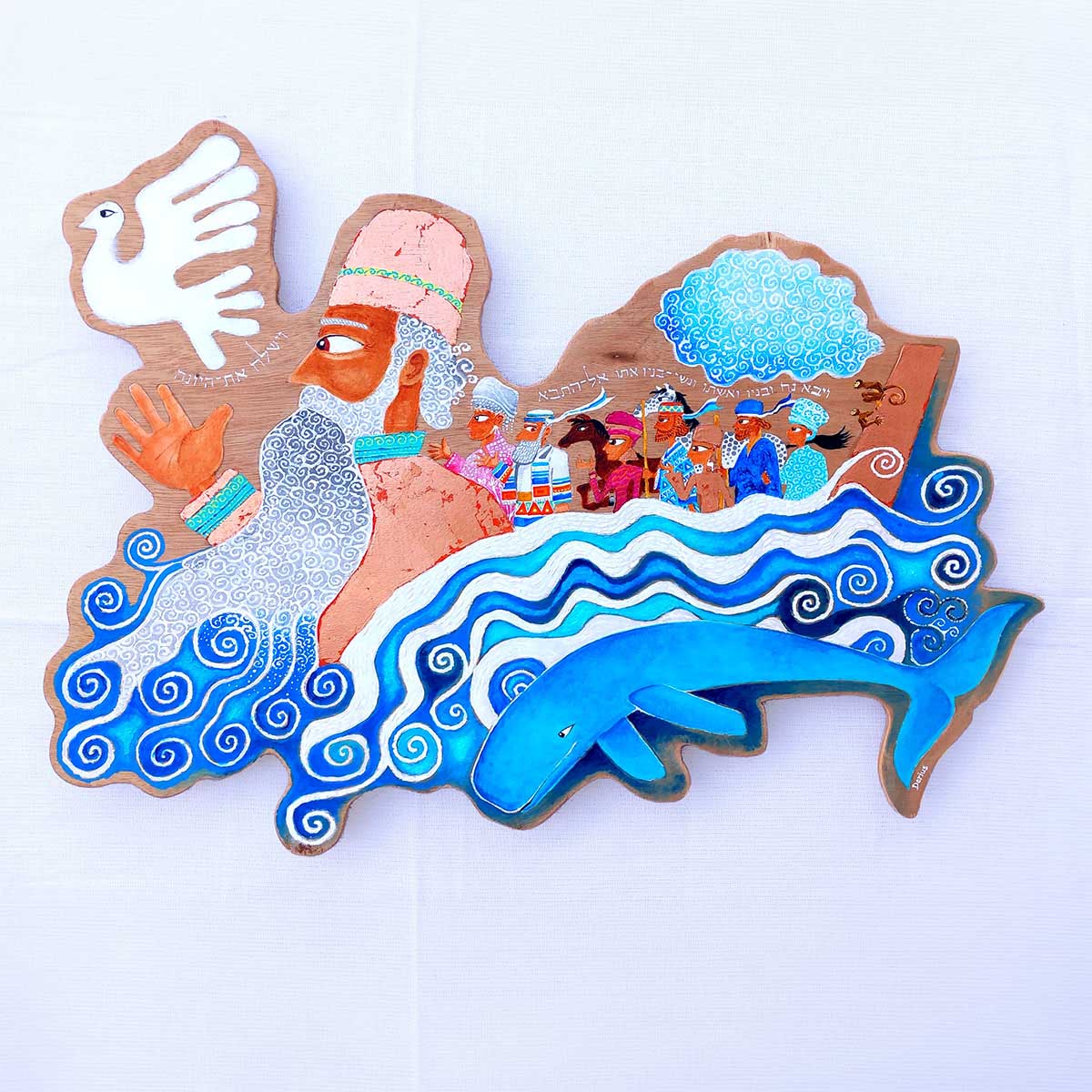
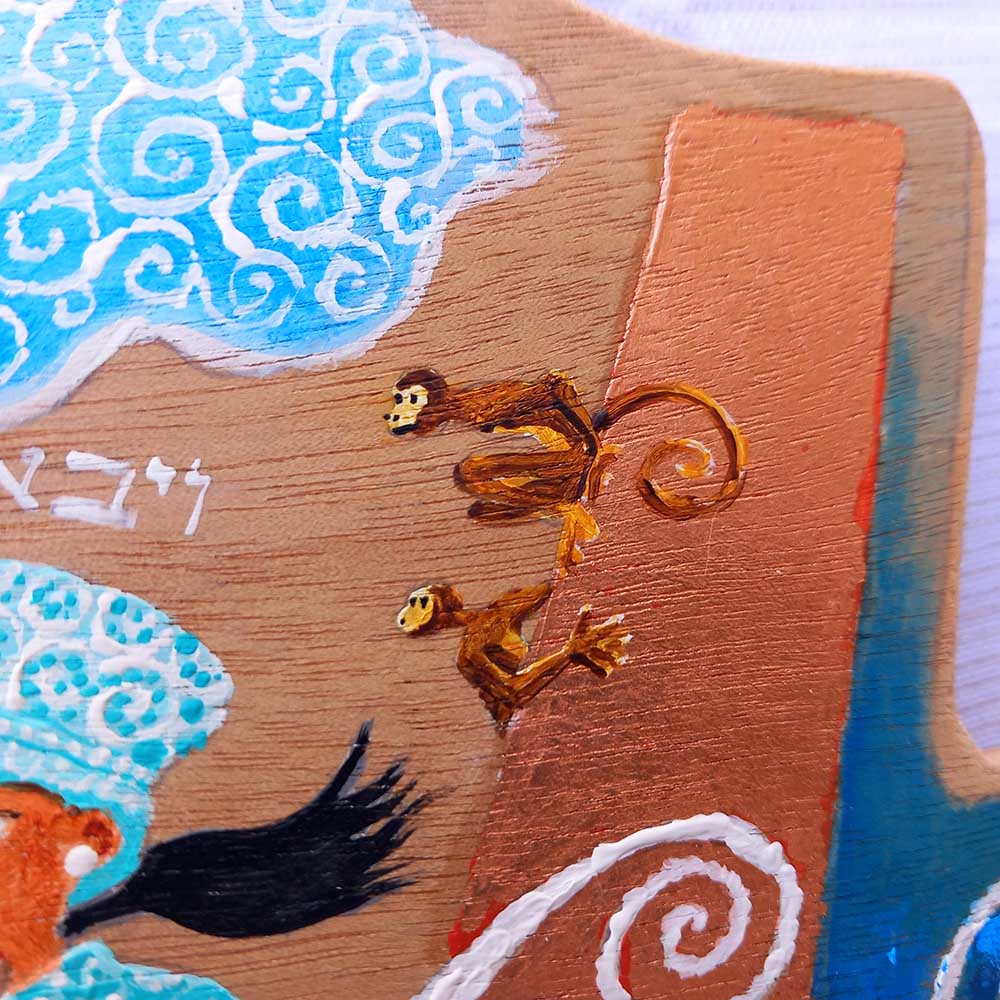
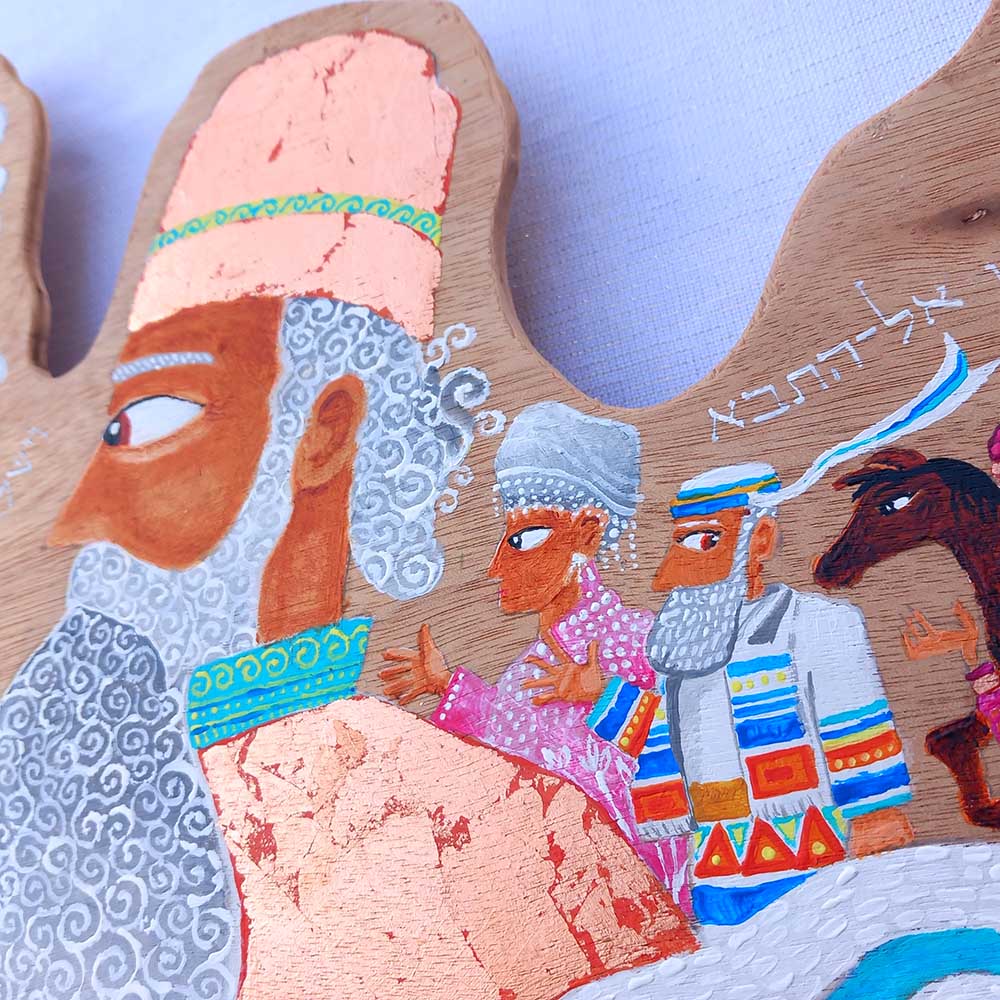
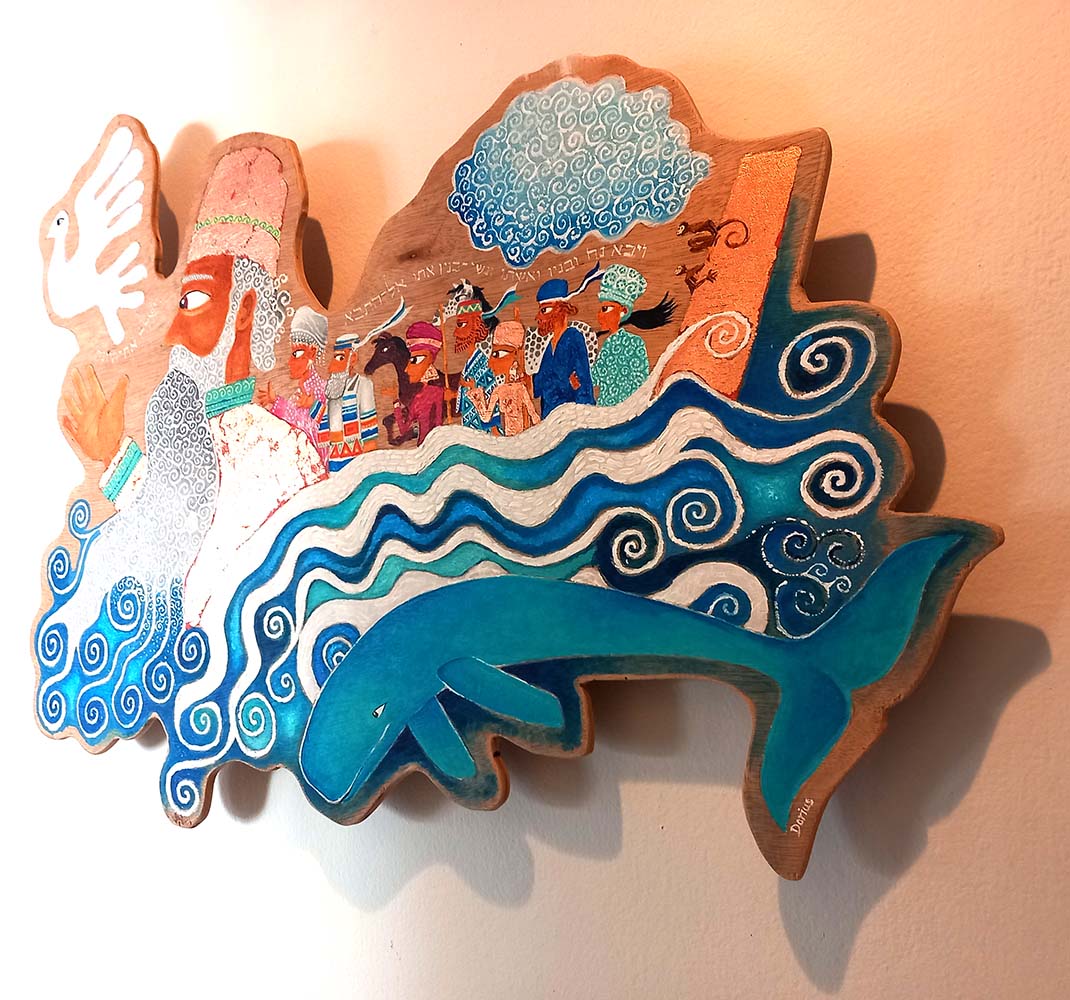
The scene shows Noah and his family, with a cloud symbolising the divine presence/Shekhina, as well as a dove being released, some lively waves, and a whale swimming in the deep, probably oblivious to the drama going on in the world above. (Perhaps we can all aspire to be as serene as the whale, swimming undisturbed in the serenity of the depths, even as the waters roil above us).
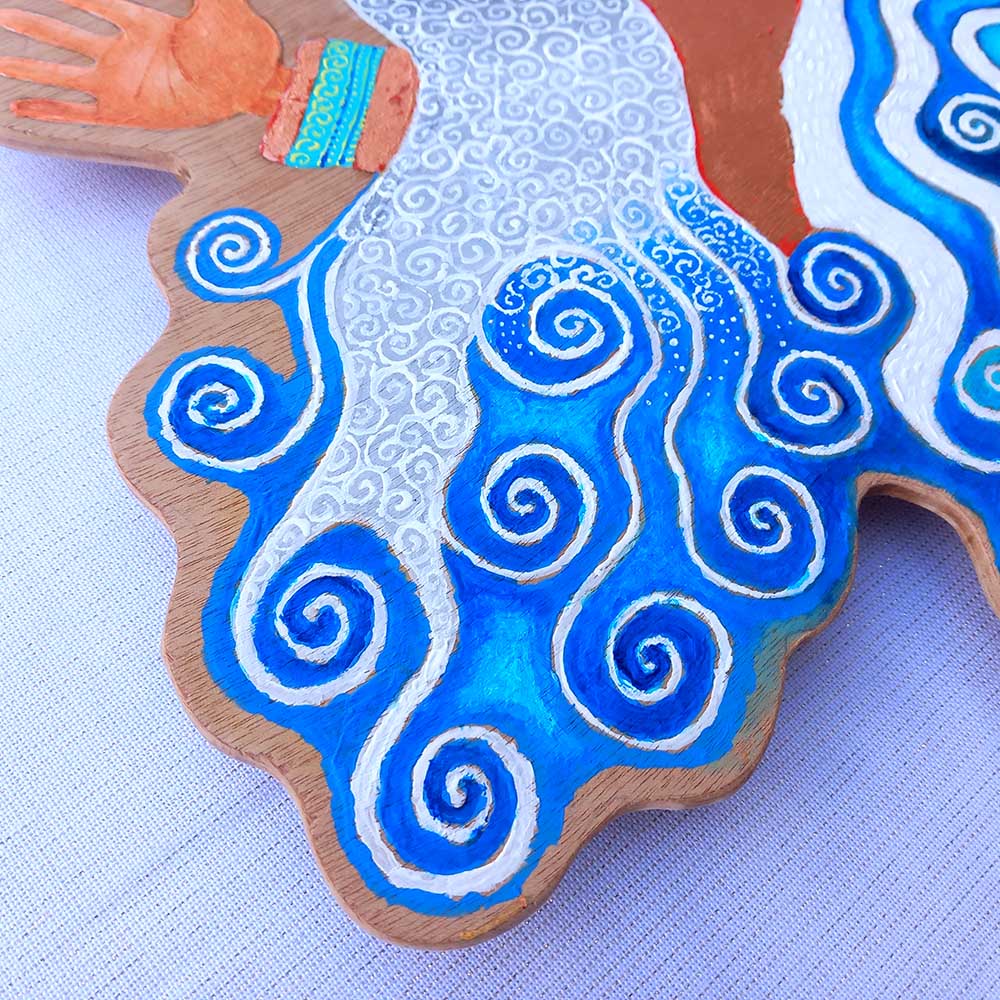
There is also the Hebrew text describing Noah entering the ark along with his wife, his three sons and three daughters-in-law, and there’s another excerpt from the text telling of the release of the dove. Noah’s garments, and a few other details, are in a pink-tinted gold leaf. The main colour-theme is ultramarine blue, cerulean blue and turquoise.
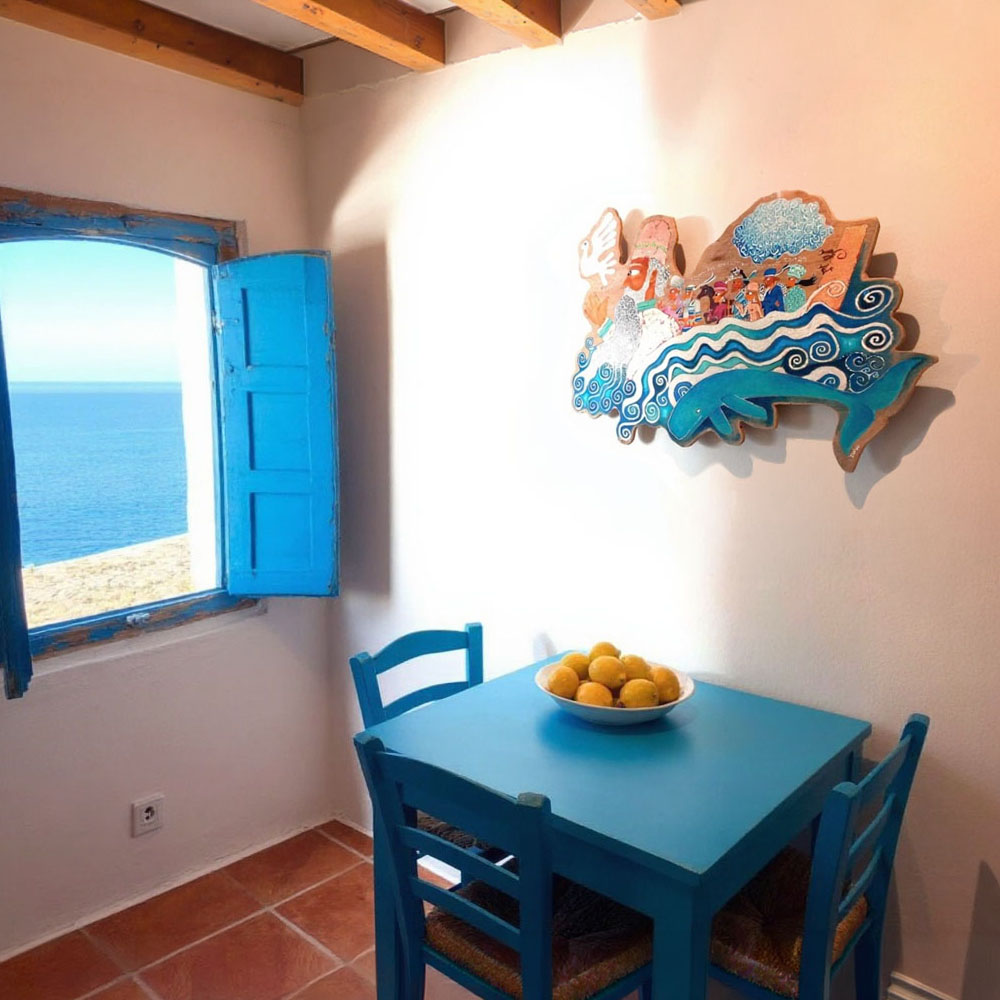
Overall dimensions: 56 x 40cm / 22″ x 16″ – see also Additional Information tab below.
And he sent forth the dove from with him, to see whether the waters had abated from upon the surface of the earth. But the dove found no resting place for the sole of its foot; so it returned to him to the ark because there was water upon the entire surface of the earth; so he stretched forth his hand and took it, and he brought it to him to the ark.
And he waited again another seven days, and he again sent forth the dove from the ark. And the dove returned to him at eventide, and behold it had plucked an olive leaf in its mouth; so Noah knew that the water had abated from upon the earth. – Genesis Ch 2
The following is taken from a lecture transcript on the website of Rabbi Yitzhak Ginsburg (Gal Einai website):
The Parsha (chapter) of Noah begins: “These are the chronicles of Noach. Noah was a righteous and earnest man in his generations. Noah followed God.” The sages say that whomever has his name repeated twice in the Torah was a tzadik. Noah was the first one. In the Zohar it says that every tzadik has two spirits, one above and one below…..
Who was Noah’s Rebbe? Who did he receive twice as much as? One might think that it was Methuselah. We know that the seven days of mourning over Methuselah delayed the deluge by 7 days. Certainly Noah learnt from him. But, Methuselah’s father was Chanoch, a great tzadik, whose soul taught Moshe Rabbeinu.
The connection between Noah and Chanoch is already in the name. When Noah found favor, it was first of all in the eyes of his Rebbe, Chanoch. Noah’s main gilgul (reincarnation) was in Moshe Rabbeinu.
Because in his life he didn’t work on bringing all the people close to God (and preventing the deluge) he had to come back and sacrifice himself to bring all Jewish people back to God, and if not, as Moshe Rabbeinu says, “erase me from Your book”, with the word containing the letters meaning the waters of Noah.
By saying this, Moshe Rabbeinu rectified Noah completely. One might say that Noah was unable to enact such teshuvah (repentance/return to God) in his generation, but it was Moshe who rectified him anyway.
The one who began to rectify others was Abraham, but he is not noted as the gilgul of Noah. He begins to rectify Noah’s lack of ability to help others, but the end of Noah’s rectification is by Moshe Rabbeinu.
The Vilna Gaon says that the dove is a symbol of the human soul (Commentary to Jonah, 1). The dove is also a symbol of the people of Israel (Song of Songs Rabbah 2:14), which is a theme frequently repeated in Midrash.
A discussion about the reasons why Noah sent out the dove can be read in an article in the Jewish Bible Quarterly entitled NOAH AND THE DOVE: THE INTEGRAL CONNECTION BETWEEN NOAH AND JONAH by Sheila Keiter (Vol. 40, No. 4, 2012 ).
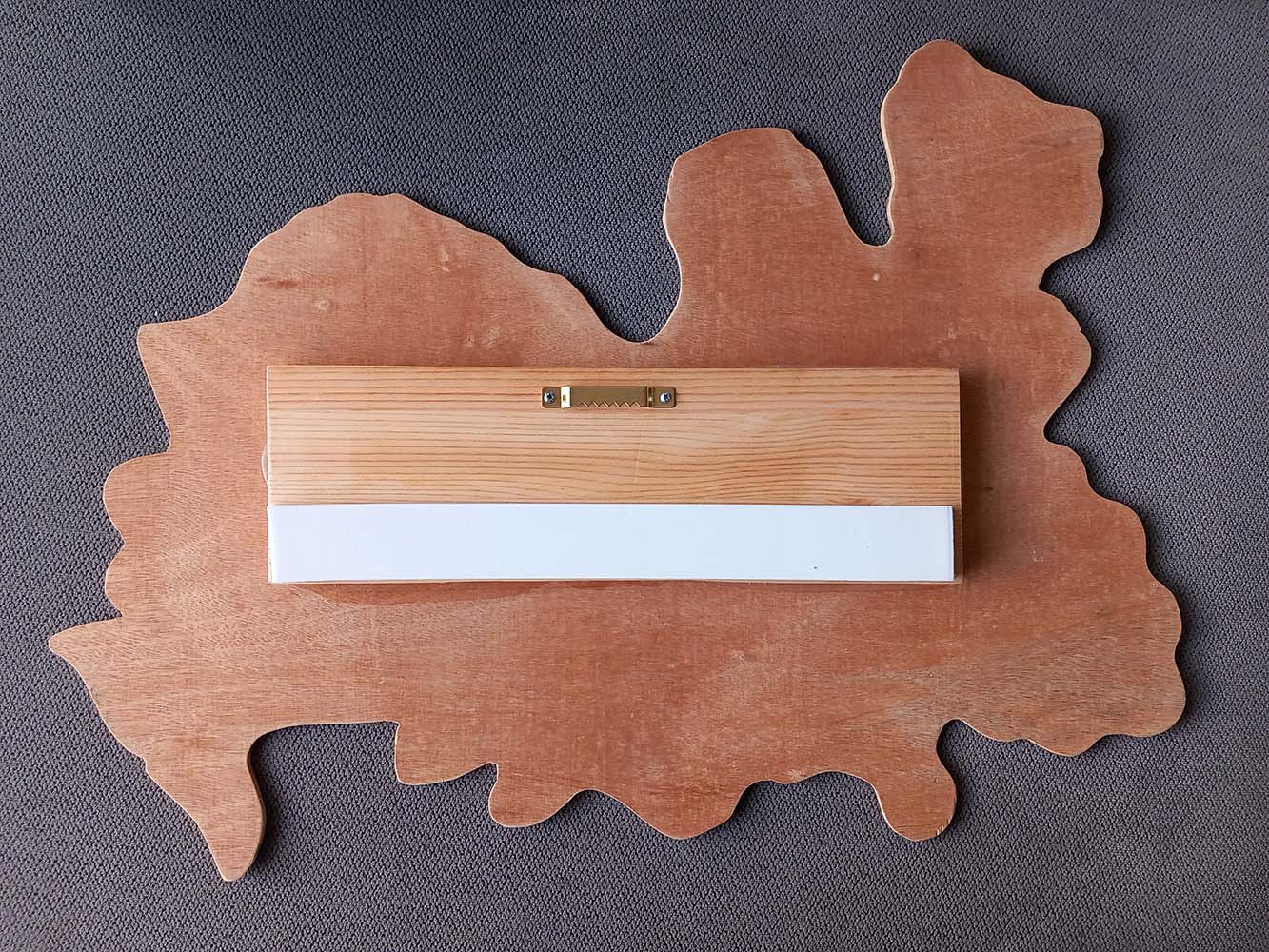
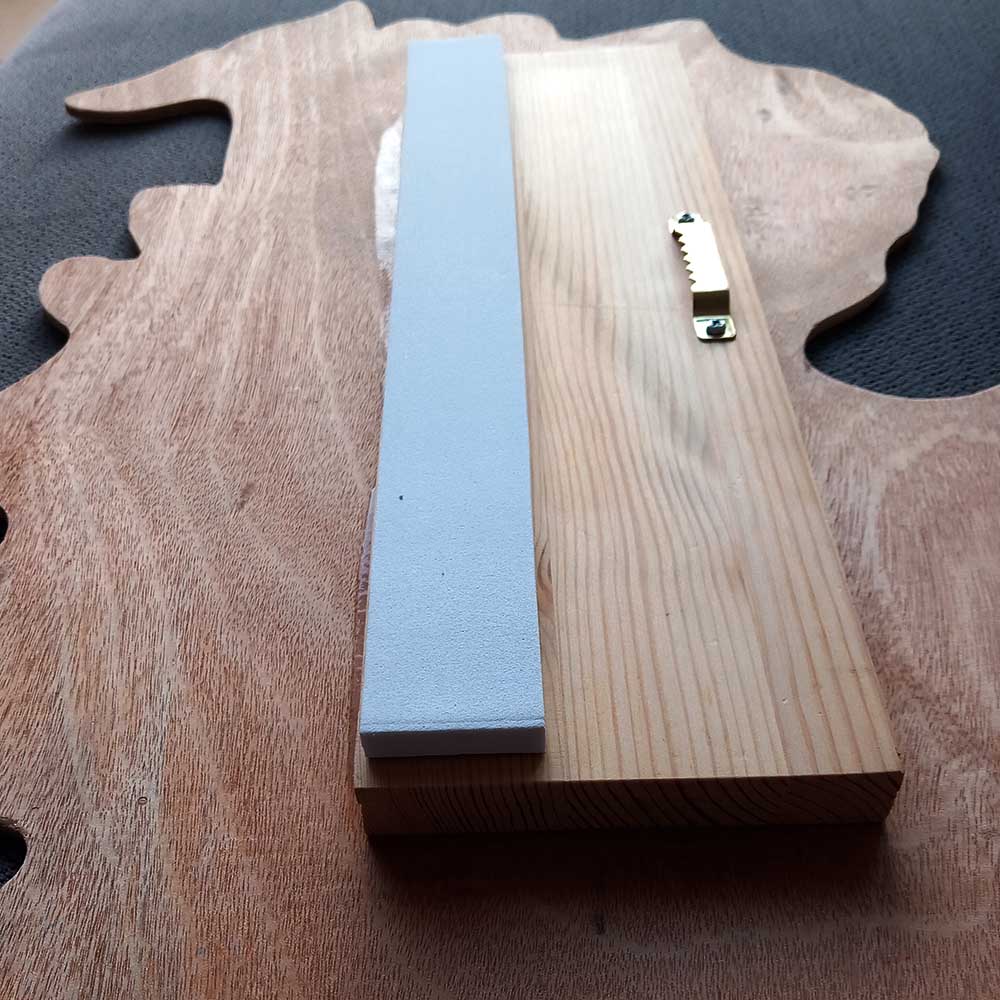
I made this piece depicting Noah and the Dove by cutting out a piece of plywood with a jigsaw and painting them with acrylic paint. The whale shape itself floats above its background because each shape is glued and screwed to a wooden batten. This acts both as a separator, and support for the whale. The shape of the background inspired this artwork. Actually it was an offcut from when I was making a specially-shaped shelf for my easel.
Whales are beautiful, enormous, intelligent and mysterious creatures of the deep that feature in countless myths and stories throughout history. Today they are endangered, both because of hunting, pollution and the huge quantities of drifting plastic waste in the seas. They are ancient creatures and move through the vast distances of the depths with grace, peace and forbearance.
Blue is the colour of the sea and the sky and so this simply felt to be the right colour for this artwork.
The most well-known Biblical story about whales is when the whale swallows Jonah, who lives inside its belly for a few days before getting out. Pinochio does too. What do these stories mean?
Jordan Peterson gives an interesting explanation of the story of Jonah from a psychological perspective, which you can see here (from about 25 mins).
And you can see the most beautiful animation of Pinochio and the whale , from the classic 1940 Disney film, here.
You can learn much more about Bereishit / Genesis and all the other Torah Parshot at the excellent and extensive Chabad site here.
And here you can see my other Biblical artwork from the Book of Genesis.
| Weight | 1.5 kg |
|---|---|
| Dimensions | 56 × 40 × 0.6 cm |