
$66.00 – $180.00Price range: $66.00 through $180.00
Biblical art: Giclee print on canvas or on fine art paper
Size 30 x 42cm (12″ x 16″)
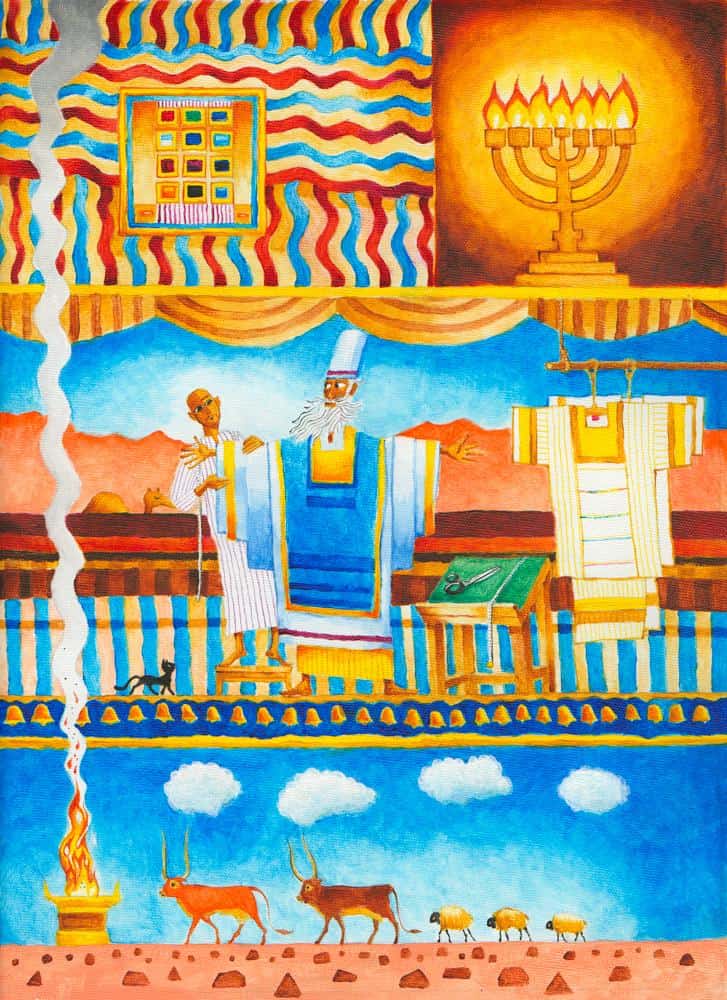
Exodus Ch 27. 20, 21
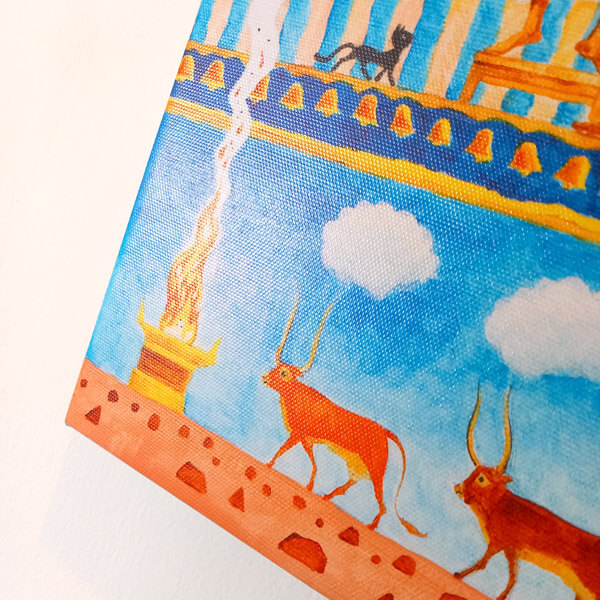
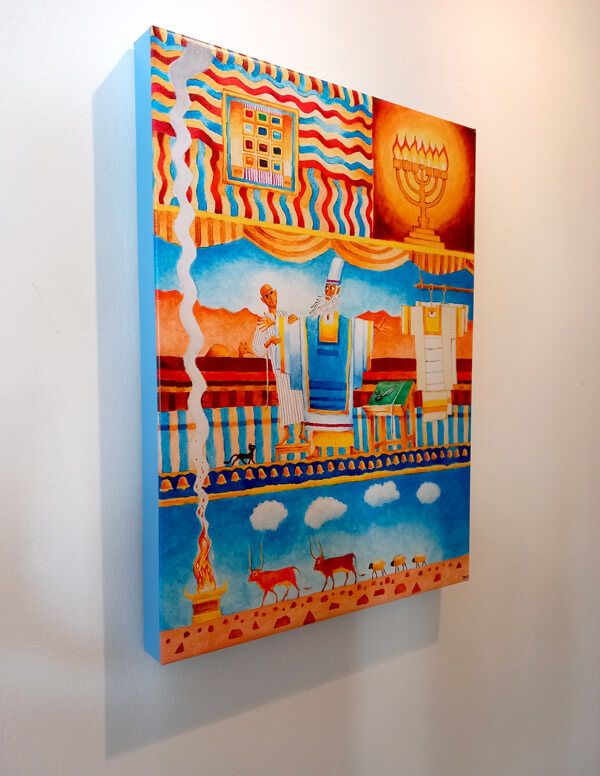
I offer this art print, on themes from Parshat Tetzaveh (from the Book of Exodus) as a museum-quality print on canvas. You can learn more about the Torah Parshot at the excellent and extensive Chabad site here. And I have several other Biblical art pieces from the Book of Exodus. The colours will probably look slightly different in the actual print than on your screen, but the print will be as faithful as possible to the original artwork. Your print will be made specifically for you once you’ve placed your order.
The Jewish people are commanded to bring pure olive oil to kindle the Menorah, to keep a flame burning continually before Hashem.
The Torah then details the sacred garments of the Kohanim, especially the Kohen Gadol: the Choshen bearing the names of the twelve tribes over his heart, the Ephod, the robe, and the golden crown engraved with “Holy to Hashem.”
Notably, this is the only parsha from Moshe Rabbeinu’s birth until the end of the Torah in which his name does not appear, yet his presence permeates the entire portion.
The first command of the parsha is about light.
The Menorah must burn continually.
Even in the wilderness.
Even in uncertainty.
Light is not reactive.
It is constant.
The Kohen Gadol’s garments were described as “לְכָבוֹד וּלְתִפְאָרֶת”, for honor and splendor.
Leadership in uncertain times requires visible dignity.
He wore responsibility.
He carried the names of the tribes over his heart.
We too are called to clothe ourselves not in fear, not in rage, but in resolve.
Resolve is steady.
Resolve prepares quietly.
Resolve stabilizes before it celebrates.
The Jewish story has never been one of passive survival.
It has always been one of steady courage.
October 7th wounded us.
But since that day, we have been engaged in sacred healing as individuals, as families, as a nation.
Healing does not erase scars.
It transforms them into strength.
From healing comes resilience.
We stabilize. We strengthen. We sustain.
And like the Menorah commanded in this week’s parsha, our light must burn continually.
As the Torah teaches:
“וְאַתָּה תְּצַוֶּה… וְיִקְחוּ אֵלֶיךָ שֶׁמֶן זַיִת זָךְ… לְהַעֲלֹת נֵר תָּמִיד”
“And you shall command… that they bring you pure olive oil… to raise an eternal flame.”
(Shemot 27:20)
The flame is holy.
But the oil must be brought by the people.
Not because the darkness disappears but because the flame refuses to.
Darkness may rise.
But it cannot sustain itself.
Light does.
Am Yisrael does.
| Canvas or Paper |
|---|